
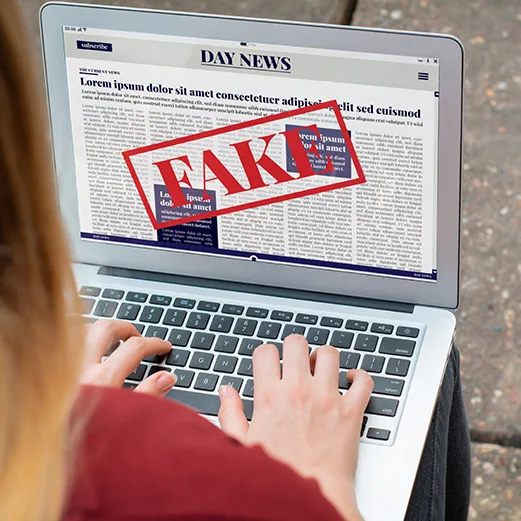
Social media is a digital rabbit hole. It’s staggering how much data is available at your fingertips. While it’s a key source of news and information, not all of it is true. How trustworthy and accurate is the content we consume, who determines what’s true, and how do you decipher the difference?
That’s where misinformation and disinformation come into play. Same thing? Not quite. This explainer delves into what they are – with real-life examples – and how to spot them, with practical tips to keep your organisation’s social channels above board.
What’s the difference between misinformation and disinformation?
Think of misinformation as a rumour mill. It is false or misleading information that is spread without an intent to deceive. Perhaps someone misreads a headline, an old statistic is reshared as ‘new news’, or a satirical story is mistaken for fact.
Conversely, disinformation is false information deliberately created to mislead, manipulate, or obscure the truth. Think fake news and ambiguous ads intended to sway opinions.
Both are on the rise globally and on a significant scale. Here are three real-life examples:
- Deceptive supermarket pricing
Walmart faced a class-action lawsuit alleging its “Rollback” pricing strategy was deceptive. The lawsuit claimed that Walmart advertised false “original” prices, making discounts appear more significant than they were, thereby misleading consumers. - Misleading advertising on internet speeds
In October 2023, the National Advertising Division (NAD) recommended that Comcast discontinue or modify its “10G Network” advertisements. The NAD found that the “10G” terminology could mislead consumers into believing they were receiving 10 gigabit-per-second internet speeds, which was not the case. Comcast was urged to clarify that “10G” referred to the company’s network aspirations rather than current service offerings. - False fuel efficiency claims
Remember ‘dieselgate’? Volkswagen and Audi marketed their diesel cars as environmentally friendly while using software to cheat on federal emissions tests, as reported by the US Environmental Protection Agency.
Is your organisation susceptible to misinformation?
Today, the quality of news and information from credible sources on social media is diluted. Anyone with internet access is exposed, and it’s hard to know what’s real. Computer-Generated Imagery (CGI), deep fakes and synthetic media add extra layers of complexity.
How exposed is your organisation to misrepresentation or half-truths? How does your social media team verify the content they publish? Can you restrict commentary on your channels?
Social media fact checkers were once seen as a great solution…
The rise and fall of social media fact-checkers
In 2016, Meta launched a fact-checking program using third parties to verify content on its platforms.
Nine years later, it’s ending.
In January 2025, The New York Times reported that the initiative – “instituted to curtail the spread of misinformation” – was being abandoned due to concerns over censorship and, in some cases, false accusations of misinformation.
Mark Zuckerberg stated it was “time to get back to our roots around free expression”. Instead, Meta will introduce community notes, like those on X.
The lesson here? External fact-checking isn’t foolproof. Organisations must take proactive steps to verify their content and manage their social media presence carefully.
5 tips to spot misinformation and disinformation
- Who? Check the source. Is it credible? Verify through other sources or official websites.
- What? Is the content factual and plausible, or is it somebody’s opinion?
- When? Context matters. Read beyond the headline, check photos, and confirm the publication date.
- Why? Are the publishers biased? Do they support claims with verified facts?
- Where? Ensure information is relevant to your region. For example, US policy references should be citing US websites.
How to avoid misinformation on social media
Social media is a double-edged sword. Organisations must balance free speech with filtering out falsehoods. A reputable digital tool can be the key to maintaining integrity.
As a social media records archiving tool, Brolly is your social media safety net.
Here’s why:
- Near-real-time capture: every interaction is recorded as it happens.
- Secure data storage: everything is archived, ready to access when you need it.
- Accurate: maintain an undisputed record of your social media activity showing what was said and when.
- Insights tracking: spot misinformation risks early by tracking keywords, sentiment and more.
- Confidence: ensure transparency and compliance with legislation with full context of your records.
And, with the upcoming Brolly Protect module, content moderation will become even easier – helping your organisation set the record straight.
Misinformation and disinformation are everywhere. Sometimes it’s innocent, sometimes it’s not. Either way, stay alert and stay protected – get a free 30-day trial of Brolly!
Free resource: Federal Government social media records are public records
The practical next step — used by the government teams Brolly works with.
Get the free resource