
“We’ve got this sorted now.”
How TasWater, Tasmania’s statewide water and sewerage utility serving more than half a million people, launched a new social media strategy with Brolly quietly keeping the record behind it.
What they needed
TasWater was building a new social media engagement strategy, dedicated to reaching customers in the medium they use most. A major requirement before the strategy went live: complying with Australian recordkeeping legislation and Tasmanian Archive and Heritage Office (TAHO) guidelines — TAHO plays the role your state archives or records program plays for US utilities.
Engagement matters for a water utility. Responding quickly to future investigations is critical when the subject is the public impact of safe drinking water.
What they had
Before the new strategy, TasWater’s social presence was minimal, according to Jonathan Mallinson, TasWater’s digital communications coordinator.
“We used Twitter to announce all the water outages and to engage with media. And we used LinkedIn for recruitment purposes.”
The research underpinning the new strategy found two things: much of the utility’s feed was negative, outage after outage, and customers preferred Facebook as their way of reaching TasWater.
What they did
The new strategy added Facebook and Instagram accounts and became more judicious about which outages were posted. Community engagement grew — and with it, the records burden: response posts often needed editing, and sometimes deleting and rewriting. With TAHO’s strict guidelines around record capture, TasWater needed a tool that kept up.
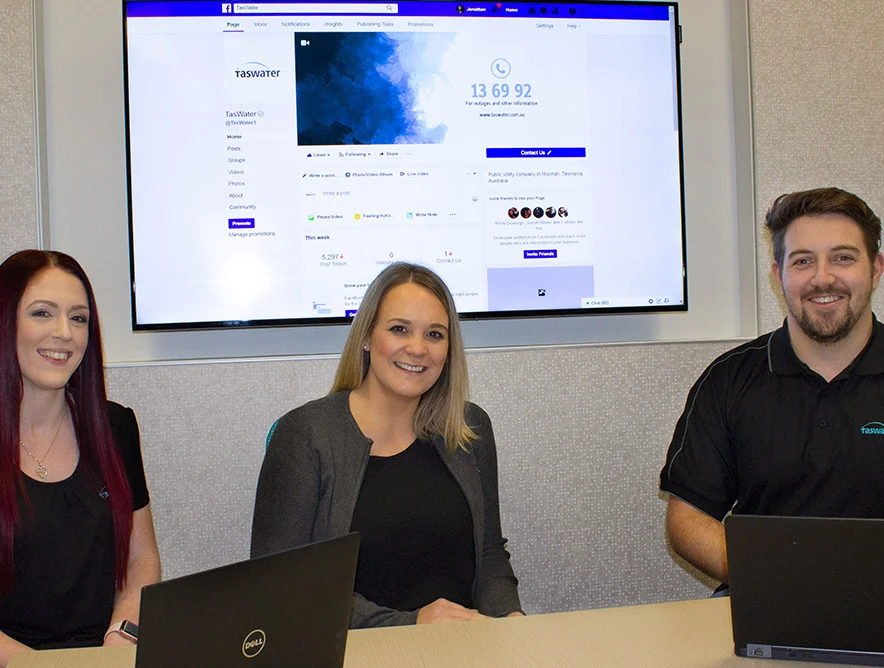
The utility investigated the market and chose Brolly.
“When people edit messages, we get an original post and a copy of the edits, and when people delete a post we get a copy of that original post as well.”
What they found
Since launching the new pages, TasWater has transformed its communication — sharing stories, community pictures and behind-the-scenes moments rather than only outage notices, with following growing quickly from launch.
Jonathan expects the archive to earn its keep again as TasWater begins a brand overhaul project, using engagement across the campaign to demonstrate its success to management.
What the future holds
With TAHO reviewing its procedures and government organizations increasing their use of social media, Jonathan’s advice is to treat records compliance as part of the strategy, not an afterthought.
“A bit of work now is going to save a whole lot of hurt in the future. If TAHO came knocking we’d have to trawl through Facebook and Twitter for hours and hours and screenshot or snip everything out of there to satisfy their reviews. But we’ve got this sorted now.”
The US parallel
The mechanics of this story translate directly to US utilities. Publicly owned utilities answer to state public records laws the way TasWater answers to TAHO: outage updates get edited as estimates change, replies pile up around contested decisions, and the earlier wording disappears from the public page unless something keeps it. Every version, reply and deletion that Brolly captured for TasWater is the same record a US records officer is asked to produce.
See how this looks for your utility at Brolly for utilities, or find your state’s response windows and statutes in the 50-state guide.
Your channels, on record from day one.
See how Brolly can capture your connected official accounts, preserve changes and support a well-documented response.